
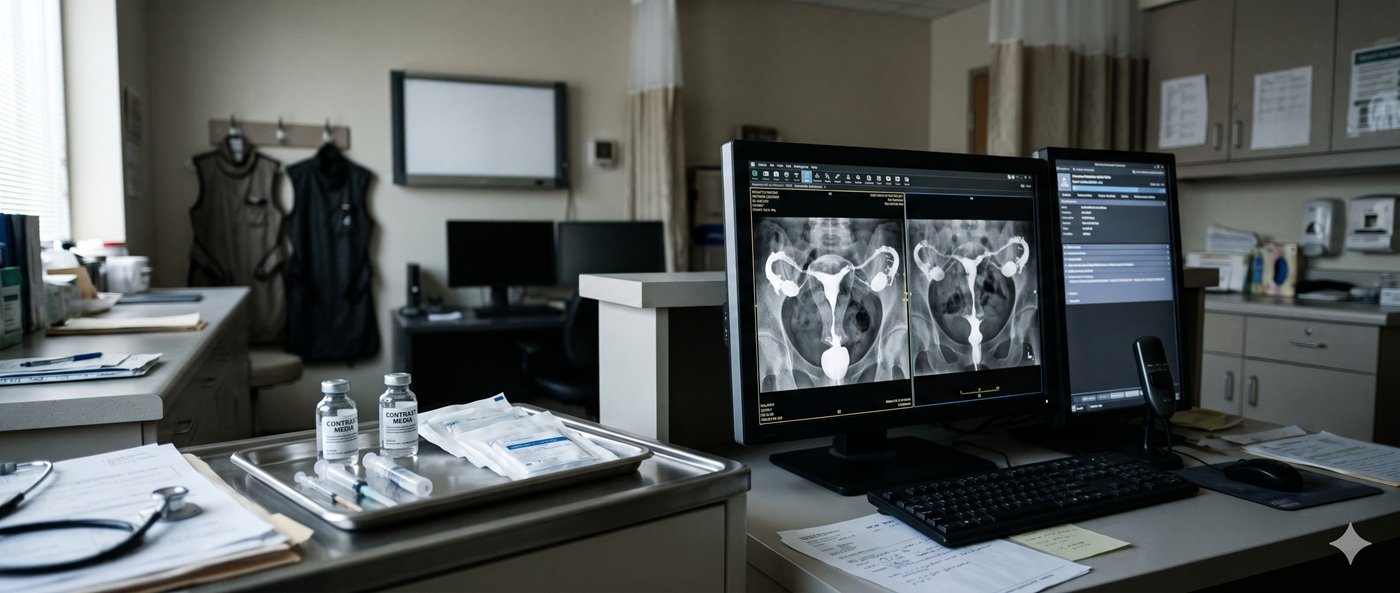
Using low-dose digital radiographic imaging and sterile water-soluble contrast media, sequential high-clarity images demonstrated a normal triangular uterine cavity with free bilateral peritoneal spillage. The clear findings helped the gynecologist streamline fertility management without invasive laparoscopy.
Clinical Overview
Key diagnostic elements of this specialized contrast X-ray procedure:
- Scheduled during the early follicular phase (Days 7–10) following strict sterile protocol.
- Low-dose digital radiographs capturing uterine filling and bilateral tubal spill.
- Clear visualization ruling out intrauterine adhesions or tubal blockage.
- High-resolution digital prints and structured report provided for gynecological review.
Specialized Contrast Radiography
HSG is best scheduled between Day 7 and Day 10 of the menstrual cycle—after menstrual bleeding has completely stopped and before ovulation occurs.
Alongside HSG, we perform Retrograde Urethrogram (RUG) for male urethral evaluation and Intravenous Pyelogram (IVP) for detailed kidney and urinary tract imaging.
Yes. IVP requires 6 hours of fasting and a recent serum creatinine report, while all contrast X-ray procedures require a prior appointment and doctor’s prescription.